by Balamohan Shingade
 | ||
|
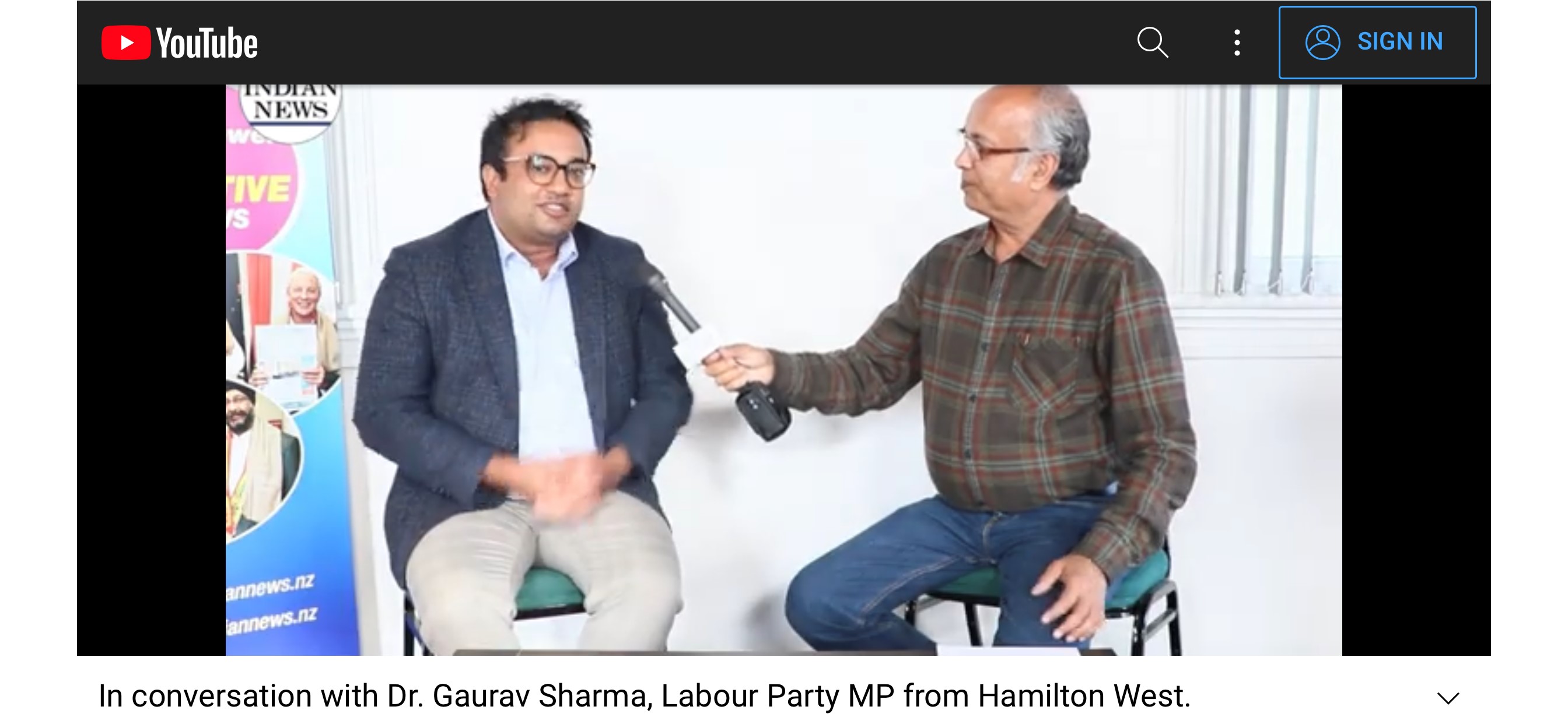
I’ve just received a thinly-veiled threat from an Auckland outlet called the Indian News.
It's in response to the story I'd shared with the Herald on being the target of a conspiracy theory by a Hindutva (Hindu Nationalism) platform, which tried to establish a link between me and the Pakistan Inter-Services Intelligence. (See Aotearoa Alliance of Progressive Indians's website for more on the conspiracy theory, part of a far-right strategy of propagating hate).
Today's piece in the Indian News (February 17th, 2022) is built around a key deceit. In reference to the Herald report, the editor-in-chief writes that the Herald "has quoted some staged, fake narratives of a couple of gullible anti-Hindu and anti-India left leaning youngsters. [...] it only confirms any doubts of some bigger and nefarious designs working behind the scenes, against Hindus and the Indian nation."
Nope. You'd hope a newspaper that calls itself "New Zealand's most trusted Indian media group" would contact its subjects and check the story. But actually, it's a routine part of their "journalism." The quotes the Herald draws on are from recorded interviews with two researchers, both of us Indian origin youth in the diaspora, which are portrayed by the Indian News as “staged”.
As an aside, are we gullible or nefarious? They're two quite opposite things... the first presumes we're "youngsters" being manipulated by some anti-Hindu, and by extension, anti-India force, whereas the second suggests we're larger-than-life puppeteers doing the manipulating.
How is it that the Indian News feels emboldened to circulate disinformation when the New Zealand Media Council upheld two complaints against them late last year for breaching ethical standards of journalism? The Media Council wrote of one of the complaints, "Comment should not cross the line into personal abuse, nor should it undermine trust in a publication's ability to distinguish fact from opinion, or robust debate from abusive personal attack. In this case the Council believes The Indian News has crossed that line."
When the Media Council's rulings aren't holding much water, what's left to do? Of course, we'll follow the complaints process... but friends, what else?
It is clear that the Indian News is an important platform for Hindutva groups in Aotearoa New Zealand. In fact, their editor-in-chief is part of the Coalition of Hindus who organised an online petition in November last year to promote fascist ideologues like M. S. Golwalkar, who wrote in 1939, "Germany shocked the world by purging the country of the Semitic Races – the Jews. [...] a good lesson for us in Hindustan to learn and profit by.” And he sits as a trustee at one of Auckland’s most important temples, the Bharatiya Mandir.
The threat in the Indian News to those who dissent against the divisive politics of Hindutva is characteristic of its chauvinism: "The harsh reality this nexus miserably fails to recognise is, that India and its majority population are not the same anymore. They do not take any nonsense, anymore from anyone whether in India or in overseas."
The funny thing is, friends: This is all in response to my fairly innocuous Facebook posts and that single interview with the Herald. I've made very little of my ethnographic studies on Hindu Nationalism available to anyone outside my research team.
The Indian News continues to attempt a nastily tight grip on who gets to represent the ‘Indian community’ in Aotearoa New Zealand. They do so using intimidation and issuing diktats, all the while patting themselves on the back for serving “Indian and multicultural communities,” and collecting endorsements from MPs of major political parties and ‘community leaders.’ No wonder then that so many Indian youth of Aotearoa New Zealand find platforms such as the Indian News to be importing the worst of the regressive patriarchal nationalism ripping through India today. And in their dominating presence in our media landscape, speaking out is risky. But as my quote ran in the Herald: “The danger is if you don’t find your voice, other people will find it for you.” And it is clear from today’s op-ed that the Indian News wishes to do just that.